A Winter Checklist for Putting Your Boat Away in Yelm
When the last boating trips of the season are over, parking the boat is only part of putting it away. Water left in an engine or plumbing system, an improperly prepared fuel system, a neglected battery, or trapped moisture under a cover can turn several months of storage into extra work when spring arrives.
A good boat storage winter checklist handles those issues before the boat sits for an extended period. For owners comparing storage options in Yelm, our property at 557 NW Rhoton Road offers outdoor parking for boats and other vehicles, with gated keypad access and daily access from 5 a.m. to 9 p.m. The preparation below should happen before the boat settles into its space for the season.
Start With Your Boat's Manual
Winterization isn't identical from one boat to another. Engine type, plumbing, fuel system, onboard equipment, and the manufacturer's maintenance requirements all affect what needs to be done. Your owner's manuals should therefore take priority over a general checklist.
This is especially important around the engine and fuel system. Most winterization guidance recommends consulting the owner's manual for model-specific procedures, including whether fogging is required. If you're not comfortable winterizing those systems yourself, having the work completed by a qualified marine technician is a better choice than improvising.
Clean the Boat Before Storage
Wash the exterior before putting the boat away. Removing dirt and residue now gives you a chance to inspect the hull, hardware, fittings, and other exposed areas while they're clean. Addressing a small maintenance issue before storage is easier than discovering it after the boat has sat all winter.
The interior deserves the same attention. Remove food, trash, wet gear, paper products, and anything else that shouldn't remain aboard for several months. Cushions and other moisture-sensitive items are better stored somewhere dry when practical. Open appropriate interior compartments to encourage airflow rather than closing damp spaces for the season. Most importantly, don't cover or store a boat while it's still wet. Water and moisture aren't limited to freeze damage. They also contribute to corrosion, mold, and mildew during extended storage.
Winterize the Engine According to the Manufacturer
The engine is one area where a generic procedure can cause problems. Winterization requirements differ between outboards, sterndrives, and inboards, and even engines within the same category can have different manufacturer instructions. The main concern is water remaining where freezing could damage components. Discover Boating recommends removing water from the engine, applying appropriate corrosion protection, servicing fuel filters or fuel-water separators, and following manufacturer instructions for fogging when required. Oil and other maintenance requirements should also be handled according to the engine's service schedule.
Prepare the Fuel System
Fuel shouldn't be ignored simply because the engine won't run for several months. The correct storage procedure depends on the engine and fuel system, so follow the manufacturer's instructions on fuel level, stabilizer, filters, and other required service.
We recommend adding an appropriate fuel-stabilizing additive and running the engine so treated fuel moves through the system. It also calls for changing fuel filters and fuel-water separators as part of winterization. Your engine manufacturer may provide more specific directions, and those instructions should control. Do this work before the boat reaches its winter parking space. Once winterized, the engine shouldn't need to be started periodically unless the manufacturer specifically calls for it.
Drain Systems That Hold Water
Engine cooling isn't the only place water can remain. Boats equipped with freshwater tanks, sinks, heads, washdowns, livewells, bilge systems, or other water-using equipment need additional attention before freezing conditions arrive. Drain those systems according to the boat manufacturer's instructions. Where specified, use the correct marine antifreeze rather than automotive antifreeze. We also recommend removing water from bilge pumps, livewells, raw-water washdowns, and similar equipment that can retain it.
Keep track of drain plugs you remove. Labeling or storing them together makes spring commissioning easier and reduces the chance of overlooking one when the boat returns to the water.
Take Care of the Battery
A battery left unattended for months can lose its charge, so include battery care in the winter routine. The correct approach depends on the battery type, charging equipment, and manufacturer instructions. Consider fully charging batteries before storage, checking their charge periodically, and keeping batteries stored outside in winter from freezing. We advise moving them to a cool, dry location when necessary. If you're removing a battery, follow the manufacturer's disconnection, storage, and charging instructions.
Before leaving the boat, inspect terminals and cables for visible corrosion or damage. That gives you time to address electrical maintenance now instead of finding a weak connection during spring preparation.
Inspect the Trailer Before It Sits
If the boat spends winter on its trailer, the trailer is part of the storage checklist too. Check the tires against the manufacturer's recommended pressure and inspect their condition. Look over the coupler, safety chains, lights, winch, straps, and visible hardware before parking. Measure the complete boat-and-trailer combination when you're choosing a parking space, not the hull alone. At our Yelm property, outdoor parking spaces are in 12-by-15, 12-by-22, 12-by-30, 12-by-35, and 12-by-45-foot sizes. We recommend measuring from the front-most point, including the hitch or tongue, to the rear-most point, including a motor or other overhang.
That full measurement matters when you're deciding how much room you need to maneuver. We recommend allowing additional length rather than selecting a space based only on the boat's nominal size.
Decide How You'll Cover the Boat
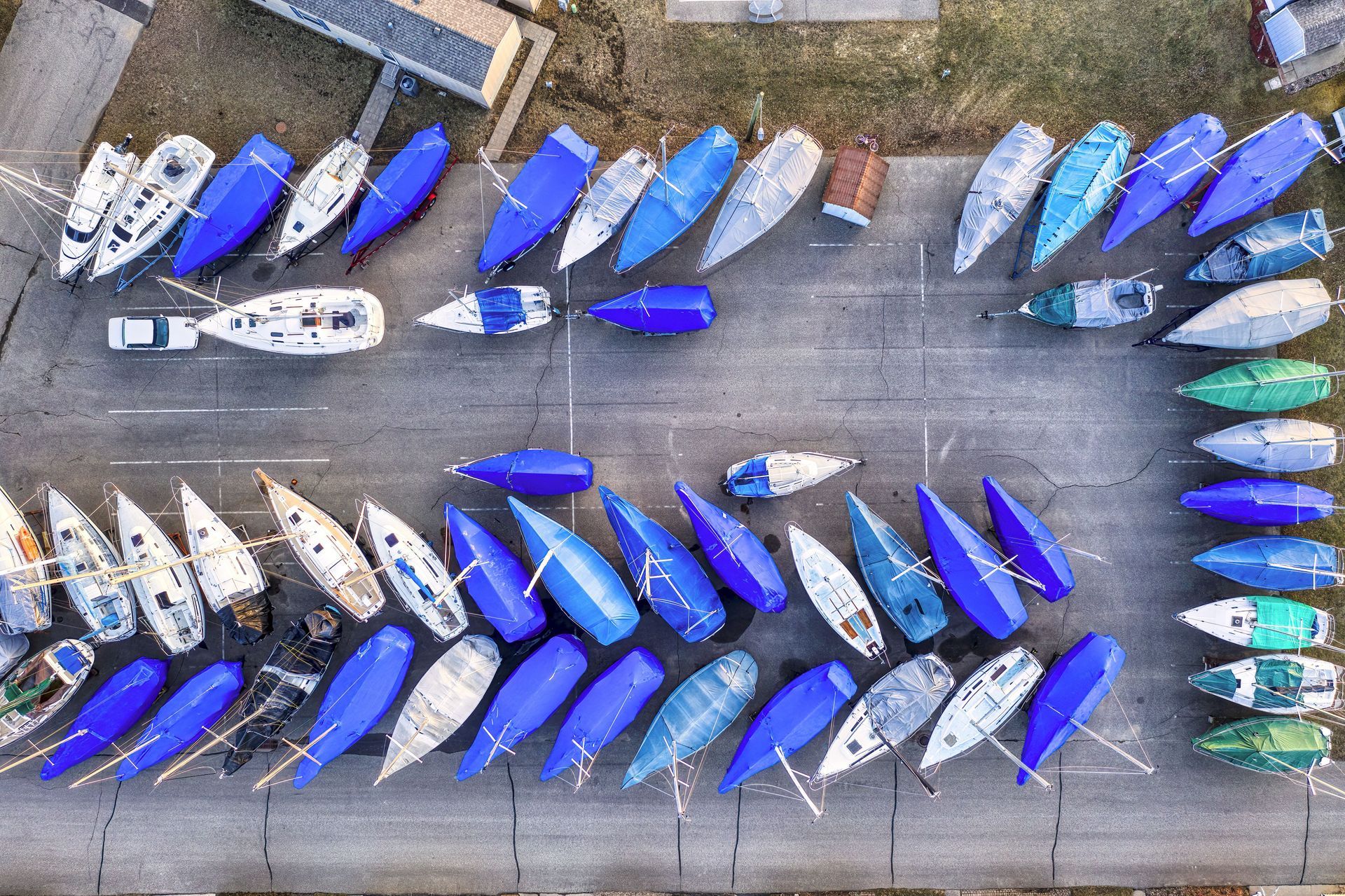
A boat stored outdoors needs a cover suited to extended storage. The goal is to keep rain and debris out without creating a poorly ventilated pocket where condensation remains trapped. A fitted boat cover and shrink wrap work differently, so the right choice depends on the boat, storage arrangement, ventilation, and how much access you'll need during the winter. Our guide to choosing between boat shrink wrap and a boat cover looks more closely at those options.
Whichever method you use, follow its installation and ventilation requirements. The cover should shed water instead of letting it pool, and it shouldn't rub against finishes or sharp hardware when the wind moves it.
Remove Gear That Shouldn't Stay Aboard
Winter preparation is a useful time to empty the boat rather than leaving an entire season's worth of equipment inside. Remove valuables and electronics that aren't meant for long-term onboard storage, along with food, wet clothing, paper products, and other items that could attract pests or retain moisture.
Dry life jackets and other boating gear completely before storing them. Check lockers, under-seat compartments, and the bilge for forgotten damp items. A clean, dry interior is much easier to reopen in spring than one sealed up with moisture inside. Don't remove required documents from your winter-storage planning entirely. At our facility, move-in requires current registration and current insurance in the leaseholder's name, a government-issued photo ID, and three pictures of what you're storing, including the license plate.
Make the Last Inspection Before Parking
Before leaving the boat for winter, walk around it once without doing any more cleaning or maintenance. This last inspection is about catching what the earlier work missed. Check that compartments are secured, the cover is properly fitted, loose exterior items are removed or secured, and the trailer is ready to remain parked. Confirm that winterization work is complete and note anything that needs attention before the first launch next season. Taking a few photos is useful too. They give you a record of the boat's condition and how the cover and trailer were set up when you left them.
Plan for Winter Storage in Yelm
Boat owners around Yelm have access to nearby lakes such as Clear Lake and Lake Lawrence, both of which are referenced on our facility page. When boating season winds down, winter preparation should be treated as part of owning the boat, not something to postpone until freezing conditions arrive. Some parks change operations during winter, including seasonal changes to watercraft launches and water service. That makes the end of the regular boating season a sensible time to check local launch information, finish manufacturer-required winterization, and decide where the boat will remain until you're ready to use it again.
If outdoor parking fits your plans, you can explore
storage options from Yelm Boat & R.V. Storage and compare the available parking sizes with the total length of your boat and trailer. Our property has keypad-gated access, 24-hour video surveillance, well-lit premises, and month-to-month leasing, so you can choose a space based on the boat's actual dimensions and how long you expect it to stay parked.
Your Boat or RV Deserves Better Than a Driveway: Choosing Between Indoor and Outdoor Storage in Yelm